

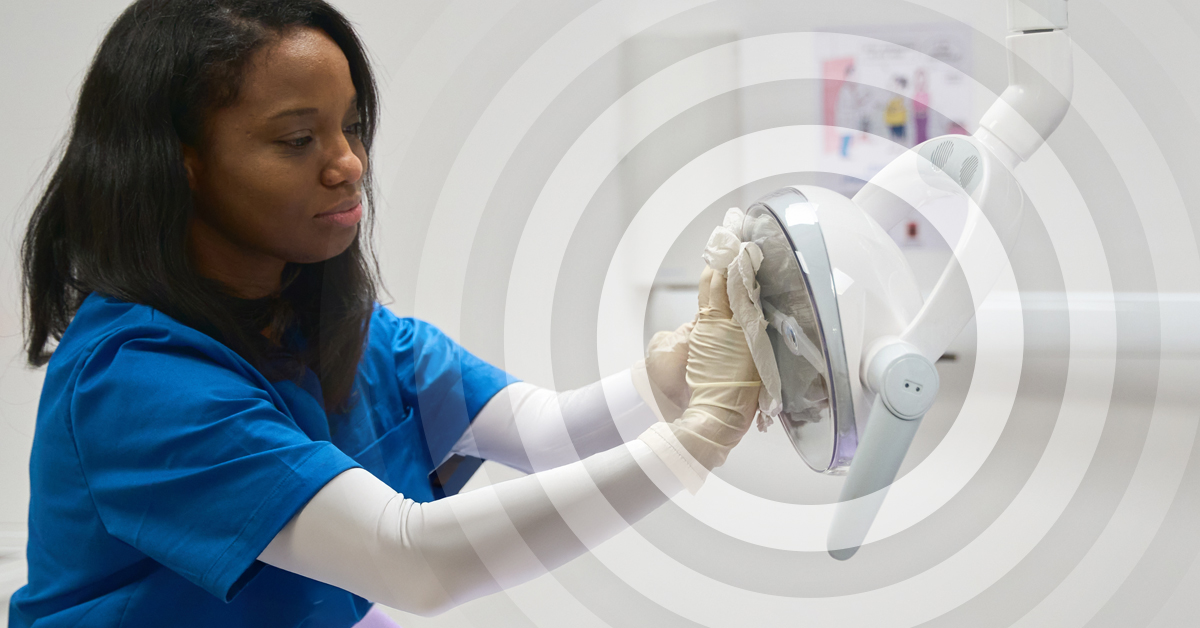
At its core, dentistry is about protecting patients and preserving their health. In truth, much of that work occurs before patients enter the operatory and after they leave. Every instrument, surface and system plays a crucial role in maintaining the barrier between health and harm – not just for patients, but also for the entire practice.
“There are so many aspects of a dental setting that could potentially cause the spread of diseases,” said Karen Dong, RDH, in a recent Dental Product Shopper editorial. Every procedure – from routine hygiene to oral surgery – involves potentially infectious materials that can contaminate the tools, equipment and operatory environment across appointments.
Although adverse events are rare, your practice remains at risk if you don’t adhere to evidence-based protocols for safety – as defined by agencies like the Centers for Disease Control and Prevention (CDC) and the Association for Dental Safety (ADS, formerly OSAP).
What’s at risk?
Perhaps the best way to understand the “value” of environmental infection control is considering what can happen in its absence.
- In an article for Patterson Dental’s Off the Cusp blog, Karen Gregory, a registered nurse who served on the OSAP board of directors, highlighted a 2001 case in which patient-to-patient transmission of hepatitis B occurred in an oral surgery practice. Per the CDC’s report, although the office seemingly followed standard infection control protocols, investigators could only speculate that “a lapse in cleanup procedures” must have occurred. At some point, a surface left contaminated with blood from one patient resulted in another contracting a serious and potentially chronic illness.
- Many dental professionals may recall a 2016 incident in which a California pediatric clinic was found responsible for the largest outbreak of odontogenic nontuberculous mycobacteria (NTM) ever recorded. After undergoing pulpotomies, 71 children ages 2 to 11 required hospitalization and surgery, with many losing permanent teeth and bone structure in the process. The clinic was reportedly met with extensive litigation from patients’ families, as well as scrutiny from regulatory enforcement agencies and the media. The culprit? Contaminated dental unit waterlines (DUWLs). This episode followed another high-profile NTM outbreak that occurred just a year earlier in Georgia, which was likewise linked to a breakdown in DUWL maintenance protocols.
It’s important to remember that operatory conditions can put staff at risk, too, as blood and saliva may carry and spread pathogens. For decades, the consensus among infection control experts has been that dental healthcare workers are uniquely at risk for infection by hepatitis viruses, as well as HIV.
Protection and peace of mind: Solutions that protect your practice and your patients
Sterilizers: The heart of instrument safety
The core of infection control starts with your sterilization equipment. Modern autoclaves and sterilizers ensure instruments are thoroughly disinfected and ready for safe patient care, and the right sterilization center space and workflow allow for more efficient and safer workflows. Choosing equipment that delivers consistent temperature, pressure and cycle timing is critical, and pairing it with effective monitoring capabilities can ensure compliance and peace of mind.
- Midmark® M9 and M11 Steam Sterilizers are designed to help make instrument processing as automated as possible. These sterilizers feature an intuitive user interface, onscreen guidance, helpful notifications and step-by-step touchscreen prompts, helping to reduce stress and improve safety with a standardized process.
- W&H Lexa and Lexa Mini Sterilizers help protect patients, mitigate risk and achieve sterilization best practices. They produce sterile, bone-dry loads with patented steam-condensing vacuum technology coupled with closed-door vacuum drying. These sterilizers also offer Wi-Fi connectivity, remote cell phone monitoring, an intuitive LCD interface and user-management traceability.
- Tuttnauer T-Top Autoclave is designed to meet your dental practice’s everyday sterilization needs while aiming to increase practice productivity. This sterilizer makes your process easier, safer and affordable with high performance class B cycles, user-friendly advanced technology with Wi-Fi connectivity, and an intuitive color touchscreen.
- SciCan StatClave G4 Sterilizer incorporates both pre-sterilization vacuum to improve steam penetration and post-sterilization vacuum to improve drying. Its 11″ chamber and vacuum-assisted closed-door drying efficiently delivers sterilized and dried wrapped instruments.
Instrument processing: Cassettes, wraps and pouches
Contaminated instruments present one of the most persistent health hazards in the profession, which makes effective instrument processing a non-negotiable task for any dental practice. Modern cassette systems, along with products like cassette wraps and instrument pouches, facilitate optimal processing workflows, bringing order and efficiency to every step, and reducing the risk of injury and infection along the way.
IMS® Signature Series® Exam Cassettes from Hu-Friedy help streamline instrument processing workflow, making all tasks – from cleaning and sterilization to storage and transport – faster, easier and safer. In addition to a durable stainless-steel construction with resin latch design, this cassette features soft, colored silicone rails to securely hold up to five instruments throughout the processing cycle, as well as a slotted hinge for easy attachment of the base to the lid.
Patterson Pouch Plus Sterilization Pouches deliver dependable, self‑sealing protection for instruments throughout the sterilization cycle. Constructed from durable medical‑grade materials, these pouches feature clear, easy‑to-read chemical indicators and strong seals designed to withstand steam sterilization. With a 4.8/5.0 Best Product Score from Dental Product Shopper, they offer trusted performance and confidence in maintaining sterility from processing to chairside use.
Patterson® Sterilization Wraps, 1 Ply provide a strong, breathable barrier that helps maintain sterility of instruments. The 1‑ply material is engineered for durability, tear resistance and consistent performance.
Sterilization monitoring
A study of dental office sterilization protocols, as reported by the CDC, showed that 68% of respondents thought they were properly sterilizing their instruments but failed to use appropriate chemical sterilants or exposure times. Surprisingly, 49% of respondents also didn’t challenge autoclaves with biological indicators, or spore tests – a key step in sterilization safety.
Here are products that help ensure you’re monitoring your sterilizer appropriately:
- Patterson® Biological Monitoring System provides a straightforward method for routine spore testing of steam sterilizers. Each kit includes biological indicators and instructions for processing and mailing to a testing laboratory. Results help practices document sterilizer performance as part of their ongoing quality assurance program.
- Patterson® Type 5 Steam Sterilization Integrators are designed to monitor critical sterilization parameters within individual instrument packs. These integrators offer a visual endpoint that indicates whether the conditions necessary for steam sterilization were achieved.
- The ConFirm™ Rapid Read 20 Minute Reader and Biological Indicators Kit uses rapid‑read biological indicators and a compatible reader to assess steam sterilizer performance. When processed according to instructions, the system provides results in approximately 20 minutes, allowing practices to verify sterilization conditions in a shorter timeframe than traditional mail‑in tests.
Dental unit waterline (DUWL) and evacuation system maintenance
DUWLs can create a serious hazard that hides in plain sight. Their design is primed for the proliferation of infectious pathogens, and in just a few days, heterotrophic bacteria levels within untreated lines can grow to more than 400 times the 500 colony-forming unit per milliliter (CFU/mL) limit set by the U.S. Environmental Protection Agency (EPA). Although evacuation systems comparatively pose less of an infection risk, contamination can hinder performance and potentially spread pathogens between patients.
- Solmetex FastCheck 15 in-office waterline test strips provide rapid, easy-to-read pass/fail results in just 15 minutes, giving dental teams confidence that lines are safe for patient care.
- The Sterisil 365-Day Straw is an in‑line waterline treatment cartridge designed to provide antimicrobial action for up to one year. Once installed, it treats water as it enters the dental unit, supporting routine efforts to maintain water quality within recommended microbial limits.
- ICX™ Tablet Waterline Treatment Tablets are formulated for daily use in dental unit water bottles. When dissolved, they help control the growth of bacteria in waterlines. The tablets are compatible with many dental units and are intended to support ongoing waterline maintenance.
- Patterson® MicroBVac Evacuation System Cleaner is a liquid solution designed for routine cleaning of dental evacuation lines. It is formulated to remove debris and help maintain suction when used as part of a regular maintenance schedule.
PPE: MASKS & GLOVES
Infection control extends beyond instruments and waterlines. Personal protective equipment (PPE) forms a critical barrier between healthcare workers and potentially infectious materials.
- Patterson Gloves are intended for general clinical use. They are available in various materials and sizes to support fit and comfort preferences.
- Cranberry Gloves are designed for clinical applications requiring tactile sensitivity and barrier protection. They are available in multiple glove materials and styles, with features that may include textured fingertips, flexible formulations, or skin‑friendly coatings depending on the product line.
- Cranberry Masks are designed to provide filtration and breathability during dental and medical procedures. They are available in different protection levels and styles, with features such as adjustable nosepieces and soft ear loops for comfort.
- Medicom Masks offer reliable filtration and a comfortable fit, protecting staff from aerosolized particles during dental treatments and procedures.
SURFACE DISINFECTION
Maintaining clean surfaces throughout the operatory is another essential component of infection prevention.
- Patterson® pdCARE™ Wipes are pre‑moistened and intended for cleaning and disinfecting hard, non‑porous surfaces in the dental operatory. They are formulated to address a broad range of routine environmental cleaning needs and are packaged for convenient, single‑step use.
- CaviWipes™ HP Surface Disinfectant Wipes are hydrogen peroxide–based disinfectant wipes designed for use on hard, non‑porous surfaces. They offer a one‑step cleaning and disinfecting process with a contact time suitable for many clinical settings. The wipes are made from a durable, low‑lint material to support thorough surface coverage.
Contact your rep or visit pattersondental.com to explore infection control solutions designed to help simplify compliance, streamline workflows, and protect your team and patients.
References:
Centers for Disease Control and Prevention. Outbreaks of nontuberculous Mycobacteria infections highlight importance of maintaining and monitoring dental waterlines. archive.cdc.gov/#/details?url=https://www.cdc.gov/han/2022/han00478.html
Centers for Disease Control and Prevention. Summary of infection prevention practices in dental settings. October 2016. cdc.gov/dental-infection-control/media/pdfs/2024/07/safe-care2.pdf
Dental Product Shopper. Safety starts here: Disinfect & protect. September 2024.
Gregory K. Surface disinfection: A key safety priority. Patterson Dental. September 2, 2015. offthecusp.com/surfacedisinfection-key-safety-priority/
Patterson Dental. The importance of safe dental instrument processing. Patterson Dental. March 28, 2022. offthecusp.com/the-importance-of-safe-dental-instrument-processing/
Solmetex. Why Georgia’s waterline rule signals a national shift in dental infection control. 2025. solmetex.com/2025/05/georgias-waterline-rule-signals-national-shift/
Rutala WA, Weber DJ. Healthcare Infection Control Practices Advisory Committee. Guideline for disinfection and sterilization in healthcare facilities, 2008. June 2024. cdc.gov/infection-control/media/pdfs/guideline-disinfection-h.pdf
