

Content Sponsored by HuFriedyGroup
In dentistry, we often talk about the patient experience, treatment acceptance, production, recare consistency, and clinical outcomes.
All of those matter.
But there is another reality that deserves some serious attention: the toll that preventive workflows can have on the clinician.
For many hygienists, burnout is not just about a full schedule or a busy day. It is often the result of repeatedly being asked to deliver high-level care in systems that do not fully support their time, their body, or their clinical expectations.
The modern hygiene appointment requires a lot. Hygienists are expected to assess disease, remove biofilm and calculus, communicate findings, educate patients, provide disease prevention and therapeutic services, support treatment acceptance, document thoroughly, manage patient comfort, and stay on time.
That is a lot to carry inside one appointment.
When the workflow is not intentional, the clinician often becomes the system. They compensate with their body, their energy, their communication skills, and their ability to “make it work” and over time, that has a cost.
Burnout Is Not Always Loud
Clinician burnout does not always show up as someone saying, “I am burned out.” Sometimes it sounds like:
“My body hurts at the end of every day.”
“I do not have enough time to do this well.”
“My instruments are so dull and I don’t have time to sharpen them.”
“I feel like I am rushing through every appointment.”
“I am tired of feeling behind.”
“I do not know how much longer I can do this.”
These comments should not be dismissed as complaints. They are often signs that the workflow, tools, and expectations are out of alignment. They are the clinician’s way of saying, “Something here is not sustainable.”
Hygienists want to provide excellent care. They want to help patients understand disease. They want to support the doctor’s diagnosis and move patients toward appropriate treatment. But when they are working with inefficient systems, outdated tools, dull instruments, or workflows that rely too heavily on repetitive hand scaling, the appointment becomes harder than it needs to be.
This is when physical fatigue can turn into emotional fatigue. And emotional fatigue can turn into absenteeism, disengagement, or even career loss.
The Physical Side of Preventive Care
Preventive care is often talked about as if it is simple or routine, but the physical demands of hygiene are significant. Repetitive motion, pinching small instruments with repeated force, applying pressure, maintaining awkward positioning to gain visibility, and working within tight time constraints all contribute to clinician strain.
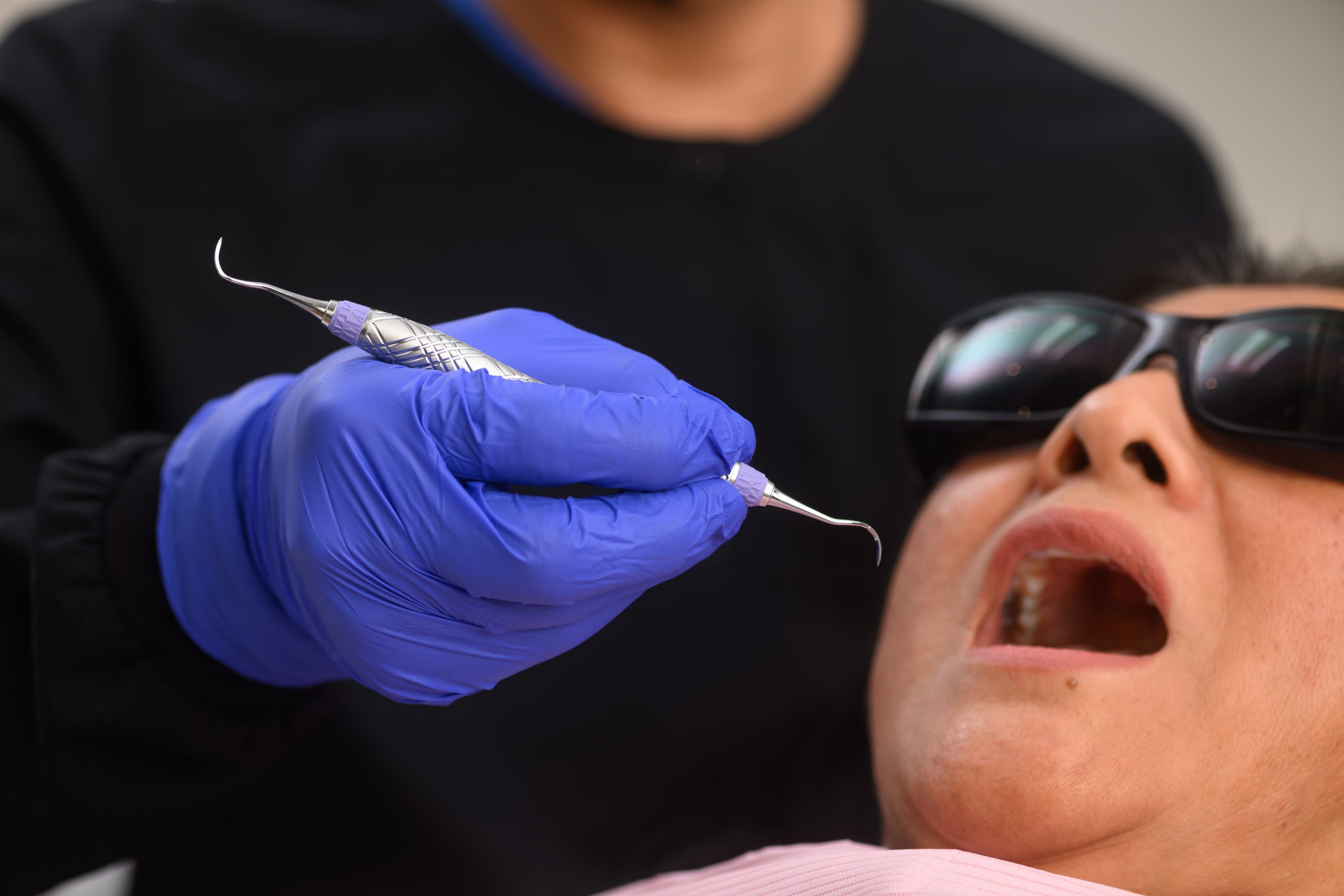
One area that is often underestimated is instrument quality. Hygienists know when their instruments are no longer supporting the care they are expected to provide. Dull, worn, shortened or outdated instruments can make appointments feel harder, slower, and more physically demanding.
For doctors, it may be helpful to think of it this way: asking a hygienist to work with dull instruments is like asking a dentist to work with a dull bur. The procedure may still be possible, but it requires more effort, more time, and more strain to achieve the desired and necessary outcome.
This is where instrument maintenance becomes more than a supply decision. Sharp instruments, ergonomic designs, and consistent sharpening protocols can directly support clinician efficiency, comfort, and confidence.
They can also reduce the physical toll of repetitive scaling and help clinicians preserve their energy for the parts of the appointment that require education, communication, and clinical judgment.
This is where the right partners and resources matter. HuFriedyGroup’s preventive solutions support the same goal we are coaching toward inside practices at Hygiene Mastery: helping clinicians deliver excellent care with tools, systems, and technology that protect both the patient experience, care and the provider’s long-term health.
Sharp Instruments Are a Workflow Strategy
A sharpening protocol is not just about keeping instruments in good condition. It is part of a healthy preventive workflow.
When instruments are sharp and well-maintained, clinicians can work with better control, less pressure, and greater efficiency. When instruments are dull, clinicians often compensate by increasing force, spending more time in one area, or relying on repetitive strokes that can increase fatigue. Patients will also take notice as this can also contribute to more discomfort during treatment.
Practices should have a clear system for evaluating instrument conditions, sharpening when appropriate, and knowing when instruments need to be replaced. This may include daily or weekly instrument audits, chairside maintenance sharpening, professional sharpening services, and replacement protocols.
HuFriedyGroup’s instrument maintenance solutions help practices standardize and simplify sharpening. The SideKick device supports routine chairside maintenance of scalers and curettes, delivering convenient, consistent results with precise angles, while the EverCare Professional Sharpening Service offers expert inspection and refurbishment by the original instrument artisans – together enabling a more proactive, streamlined approach to instrument care.
Because this is not only about the instruments…it is about protecting and retaining the clinician who uses them every day.
Reducing the Burden of Hand Scaling
Hand scaling remains an essential part of clinical care. It is not being replaced. But it also cannot carry the full weight of the appointment. It is not always the most efficient or effective way to care for the patient in our chair — not just their mouth, but their entire body.
When clinicians rely too heavily on hand scaling for biofilm, stain, and calculus removal, the appointment can become more physically demanding than necessary. Hand instruments are valuable, but they are not designed to do everything alone. Biofilm management requires a more intentional approach, especially when we consider the pathogens, inflammation, and microbial communities that influence both oral and systemic health.
Modern preventive workflows allow clinicians to use the right tool for the right task. Power instrumentation, including piezoelectric scaling and low-abrasive air polishing, can help reduce unnecessary hand scaling and allow clinicians to focus their energy where it matters most.
Supra- and subgingival air polishing with low-abrasive powders, such as glycine, can support efficient biofilm and stain removal while improving patient comfort. HuFriedyGroup’s PWR Pair and PWR Air devices align with this approach by helping clinicians manage biofilm more efficiently and effectively, supporting the level of care modern prevention requires.
This matters because time, energy, and clinical effectiveness are all resources.
When biofilm management is more efficient and effective, clinicians have more capacity for co-discovery, education, documentation, and meaningful patient conversations. They are better able to reserve hand instrumentation for targeted hard deposit removal, rather than using their hands to carry the full burden of the appointment.
The goal is not to do less care. The goal is to deliver care in a way that is more efficient, effective, and sustainable for both the patient and the provider.
Investing in Clinicians Supports Retention
The instruments and technology a practice provides send a message. They tell the clinician whether the practice sees their work as physically demanding, clinically valuable, and worth supporting and investing in.
Ergonomic instruments, such as HuFriedyGroup’s Harmony Scalers and Curettes, also support this conversation. Their balanced weight, optimized diameter, and precision-crafted EverEdge 2.0 working ends are engineered to reduce pinch force and pressure applied to the tooth surface helping to minimize hand fatigue and the risk of musculoskeletal strain without sacrificing control or tactile sensitivity. EverEdge 2.0 blades also maintain sharpness longer, significantly reducing the need for frequent sharpening. For clinicians who perform repetitive scaling movements every day, those details matter.
In today’s hygiene market, they also matter for retention and recruitment. Hygienists are paying attention to whether practices invest in the tools and technology they use every day. Sharp instruments, clear sharpening systems, ergonomic designs, air polishing, and efficient workflows are not just clinical resources. They are part of the clinician experience.
A practice that prioritizes these areas sends a clear message: we value the clinician, not just the production they create.
That message can influence whether a hygienist stays, whether they feel supported, and whether they would recommend the practice to another provider. It can also become part of how a practice positions itself when recruiting new team members.
Hygiene Mastery’s Recruitment Department sees this come up often in conversations with hygienists. Providers are not only looking at compensation and schedules. They are also paying attention to whether the practice invests in the tools, technology, systems, and support that allow them to provide excellent care without sacrificing their own health.
For practices trying to hire in a competitive hygiene market, clinician-supportive tools and systems are no longer small details. They are part of the culture and often part of what helps a hygienist decide whether a practice feels like the right long-term fit.
Protecting the Provider Protects the Patient
The clinician toll directly impacts the patient experience.
When hygienists are physically exhausted, rushed, or unsupported, it becomes harder to deliver consistent education, thorough documentation, and confident communication. Patients may receive less explanation, fewer co-discovery moments, and less clarity around their condition and treatment needs.
On the other hand, when clinicians have efficient workflows, sharp instruments, ergonomic support, and modern technology, they are better positioned to slow down where it matters, explain what they see, connect clinical findings to patient values, and support treatment recommendations with confidence.
This is where the right clinical resources make a difference. HuFriedyGroup equips clinicians with instrumentation, technology, and preventive solutions designed to improve efficiency, precision, comfort, and biofilm management. When those resources are paired with the education, systems, and clinical calibration Hygiene Mastery brings into practices, the provider is better equipped and the patient experience becomes more consistent.
Clinician well-being is not separate from patient care. It is a foundation of patient care.
Moving Toward Sustainable Prevention
If practices want sustainable prevention, they must look beyond the schedule alone. They need to be asking themselves:
- Are our instruments supporting or slowing down our clinicians?
- Do we have a consistent sharpening and replacement protocol?
- Are we relying too heavily on hand scaling for tasks that could be managed more efficiently?
- Are we using technology that supports biofilm management, patient comfort, and clinician health?
- Are our workflows protecting the provider as much as they protect the appointment?
- Are we creating an environment clinicians want to stay in and grow with?
Preventive care is too important to be built on clinician endurance alone.
At Hygiene Mastery, we know healthy hygiene departments require more than clinical skill. They require systems, tools, communication, calibration, and leadership that support the clinician behind the care. This is the work we help practices do every day: align the team, strengthen clinical standards, teach prevention strategies that enhance patient care, improve communication and patient-centered vocabulary, and create workflows that make excellent care more predictable and sustainable.
That is why the partnership between Hygiene Mastery and HuFriedyGroup is so valuable. Both deeply rooted in strong clinical education, Hygiene Mastery provides the knowledge, calibration, prevention strategies, and communication systems needed to create sustainable growth and elevate the standard of care. HuFriedyGroup provides the high-performance instrumentation, technology, and preventive materials that help clinicians deliver that care with greater efficiency, effectiveness, and comfort.
Because when clinicians are supported, patients are better served. And when the workflow protects the provider, the entire practice becomes stronger, healthier, and more sustainable.
Content Sponsored by HuFriedyGroup
